On Being Prepared

We are having a family conference this week on climate change and including grandchildren, three boys, 15, 13 and 11, and as it happens, all Boy Scouts.  The subject, while not exactly the elephant in the room, has been off-limits to date, even among the adults — as uncomfortable as money, politics, or the fact of death.  Environmental education exists in Florida, see Pine Jog Environmental Educational Center, despite deniers in high places.  But I wanted to know how global warming/climate change was being presented to young people by various groups, including the Boy Scouts of America.  So this morning I did some research (see links at the end of the post).  Laurie David,  a global warming activist and the producer of the Academy Award-winning film An Inconvenient Truth and the HBO documentary Too Hot Not to Handle, has collaborated with Scholastic publishing to produce an excellent guide to the science of global warming and what families can do to mitigate its impacts.  The graphics are delightful and on target.

be-prepared2There is a measured tone to this guide (and others) that reminded me of President Obama’s response to NBC 6 Chief Meteorologist John Morales’ ‘what now’ questions (upon the release of the National Climate Assessment): more fuel efficient cars and Energy Star appliances and letting one’s elected officials know ‘this is important.’    It all seems so sensible and doable, like doubling up on recycling and changing out lightbulbs, and in some ways easier to swallow than adaptation*, which is where most climate experts and savvy political leaders are beginning to put their attention.  For their part — and I commend them for it — the Boy Scouts of America have added a new Sustainability Merit Badge  to the existing one covering the Environment.  Eagle Scout candidates need at least one of the two to qualify.  Not so surprising given the 100 year old organization has been devoted to nature and conservation throughout its history.  There are 100 million scouts worldwide, making it the largest youth organization on the planet, so this is big news.

What lit a fire under my seat about getting the family together now was the release of the National Climate Assessment with its segments on regional impacts.  For Floridians, as I’ve noted here before, preparing for hurricane season is an annual ritual, albeit some people have been reassured by a succession of relatively quiet years. Preparedness is a mindset one can work with when it comes to serious talk about climate, simple as the Boy Scout motto.  Because as the Southeast regional report makes clear, Florida is exceptionally vulnerable to all the impacts of global warming, among which flooding due to sea level rise and salt water contamination of our drinking water and soil, are perhaps the most immediate and most worrying.  First, we have to be willing to get it all out on the table: confusion, denial (whatever form that takes), fear, distrust.  What will be important is to recognize that every day we waste politicizing the facts of climate science is a day we don’t take action.  We need to leave the ‘debate’ to those whose interests it serves, and get on the same page in terms of risk assessment.  You can bet the insurance industry IS paying attention.

“You won’t find many climate change doubters these days within the property insurance business.”  ~ David Kodama, senior director of research and policy analysis for the Property Casualty Insurers Association of America, or PCI. (Bankrate)

Our strategy so far has been to show more than tell (although we’ve done some of that, too), and it is by now quite clear to everyone in our immediate and extended family and circle of friends, that we are tree-hugging climate activists.  None of the things we have done so far — KXL protest march, EV, renewable energy for our utilities, tree-planting, vegetables from a local farm, no CAFO’s, organizing for Transition, feels like a big deal sacrifice.  It’s child’s play compared to what we — and that means every capable person — may yet be called to do.

*Mitigation and adaptation

Down to Earth (Scholastic), Laurie David’s guide

The National Science Foundation’s Exploratorium, great for older kids

The EPA’s Climate Change and Kids site, multi-age groups

Seeds of Change

Garden Song
Inch by inch, row by row,
Gonna make this garden grow.
Gonna mulch it deep and low,
Gonna make it fertile ground.
Inch by inch, row by row,
Please bless these seeds I sow.
Please keep them safe below
‘Til the rain comes tumbling down.
~ Pete Seeger

With this chorus still ringing in my ears, I spent Mother’s Day weekend in Sarasota with my spouse/best buddy, meeting up with Don Hall, executive director of Transition Sarasota, to learn how he built the group through “experimenting with many things and seeing what stuck.”  Sounds familiar.  Don came to Florida from Boulder, CO, site of the first Transition Town in the U.S. He is a Transition trainer and running the nonprofit organization is his full-time job and his passion.  Sarasota proved to be fertile soil for the ideas of Transition, and today it’s hard to know what came first: the active farm to school program, an established Saturday farmers market, a gleaning group whose members include Transition volunteers, restaurants — even those at the local hotels, Indigo, where we stayed and the nearby Hyatt — that proudly display their

Fresh Local Sarasotasupport of local food.  Of course, none of this would be possible without the interest and support of local chefs, growers, purveyors and the population.  Sarasota’s Saturday farmers market is a happy mob of people bearing cloth and string bags!

This cultural shift around food has been building for some 40 years, and is often credited to Alice Waters, a pioneer of the organic food movement that argues “cooking should be based on the finest and freshest seasonal ingredients that are produced sustainably and locally.”  Chez Panisse, her Berkeley, California, restaurant still caters to a  knowledgeable, well-heeled crowd of ‘foodies’ while her foundation takes the message (and funding) into schools.  Waters is also a Slow Food vice-president.  Although there remains just a hint of elitism in the movement — Van Jones calls it  Whole Foods, whole paycheck —  the good news is, the idea that good tasting, healthy food as a right is beginning to sink in with the general public.  You could call it a democratizing process that will benefit us all.  Food is where Transition often begins in a community because it is easy to make the case that local grown is good not only for taste and health, but can lead to a healthier, sustainable local economy and lower carbon footprint.   

For me, it was both inspiring and a little daunting to see how the movement is coming alive on Florida’s West Coast in partnership with Transition.  One of the first successful Transition Sarasota projects was the Eat Local Guide, a directory to farmers markets, buyers clubs, groceries featuring local foods,  restaurants, and community gardens, that Transition Palm Beaches would do well to emulate.  The Guide also offers a changing menu of relevant articles gleaned from around the country that capture the strength of the shift to sustainable agriculture.   Transition Sarasota also spearheaded the 10% local food shift challenge, inviting people to switch just 10% of their food purchases to local growers and purveyors.  The impact speaks for itself:

While a 2006 study found that only 0.7% of the $797 million Sarasota County residents were spending every year on food was purchased directly from a local farmer, a shift of just 10% in this direction would add $80 million a year to our local economy, potentially creating thousands of new green jobs.

Came home to find more news that feeds my optimism about local food growing, including today’s New York Times article on the topic.  From Lincoln, NB, yoga student and friend, Betsey Shipley, enclosed an article from the Journal Star about the explosion of community gardens thanks to a program not only to support local farms and farmers, but to train new ones.  Over 170 people signed up for the Growing Farmers Program that began in 2005, and 35 have started farming.

Earth Day Tree PlantingBut it’s a 2014 initiative in the Lincoln community that really got my attention:  a partnership with a local church to create Nebraska’s first food forest, “a woodland eco-system that yields food for people.”  If there is one thing I love more than trees, it is trees that bear fruit!  As it turns out, First UU of the Palm Beaches is already well on our way.  On Earth Day, this small, multi-generational team, including our minister, CJ McGregor, launched our own food forest with donated trees along strip of land on church property.  A growing (!) Tree Fund promises there will be more planting parties like the one pictured here.  Inch by inch.


Food Fight and Seed Bombs*

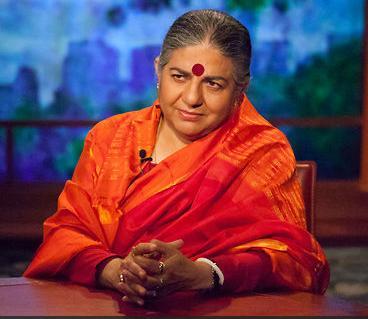
“Seed is not just the source of life. It is the very foundation of our being.”  – Vandana Shiva

 If the name Vandana Shiva doesn’t ring a bell, you probably don’t know jack about why saving and sharing seeds from your organic produce is the ultimate act of rebellion against the corporatocracy.  No matter.  Just know that this food fight is anything but a frivolous venting of teenage high spirits.  In fact, with California’s drought worsening and threatening crops, and Monsanto scoring big in legal battles to continue privatizing nature, the timing couldn’t be better.  If you eat, this fight is your fight. Consider yourself enlisted.

Vandana Shiva 2Dressed in her beautiful saris and signature bindi, physicist, author, ecofeminist and seed activist, Dr. Shiva hardly looks the revolutionary. But spend a few minutes in her company – there are plenty of videos to choose from – and she will make a powerful case for why you absolutely must 1. Support your local organic farmer and grow what food you can sustainably and 2. Save your seeds – see links below on how to do that – and/or start a small seed-sharing circle. The goal is nothing less that long-term food security and reclaiming your rights as a world citizen.   It is food democracy that benefits everyone in the food chain.

“We need to build the direct relationship between those who grow the food and those who eat it. Care for people has to be the guiding force for how we produce, process, and distribute our food…We need to shift the paradigm of economics to measure the well being of people not the profits of the oligarchs.”

Shiva’s organization, Navdanya, is a network of seed keepers and organic producers across 16 states in India. It has helped set up 54 community seed banks across the country, and has trained half a million farmers in sustainable agriculture. According to Dr. Shiva, these actions were also aimed at stemming an epidemic of farmer suicides as farms and livelihoods were lost to Big Ag’s invasion of India.

Maybe farming isn’t in your blood or your future. Perhaps converting a patch of your lawn into a vegetable garden isn’t your thing. Don’t expect an automatic deferral. You can still be a part of the support corps, carefully conserving seeds from your produce — easy in the case of squash, pumpkins, melon and peppers – and a little more challenging with tomatoes. Tip: just cut a small section from the next great organic tomato you eat and put it in a pot to sprout. More specifics from Organic Gardening. Organic potatoes and sweet potatoes give you a clue about what to do next by sprouting conveniently in your vegetable bin. Plant one in a pot and follow these directions from Container Gardening.

All of this seems pretty mild mannered as revolutionary action goes, although you may encounter some strong resistance from HOA’s that love pouring your money down the drain (into the water system) to maintain large expanses of grass, or communities hell-bent on upkeeping standards of conformity.   (Backyard chickens, hold the fort.)

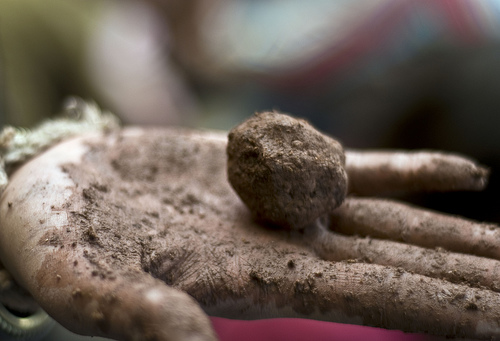
seed bombYou could waste a lot of time fighting city hall.  So here’s one of my favorite weapons of grass destruction: the seed bomb. These come in many forms – balls of clay embedded with seeds and organic fertilizer, eggs filled with the same, and seed pills, all the above in miniature.  These little projectiles are perfect for challenging locations, “spontaneous floral attacks,” and vegetable gardening below the radar. You can carry a seed bomb (or pill) in your pocket and launch an attack of edible landscaping in the least expected public places. Think of this as a time-bomb that does some good in the world. Sneak back for the harvest, if you dare.

*Seed bombing is a technique of introducing vegetation to land by throwing or dropping compressed bundles of soil containing live vegetation (seed balls).

More good reads:

http://www.cornucopia.org/2014/04/vandana-shiva-cultivating-diversity-freedom-hope

http://www.guerrillagardening.org/ggseedbombs.html

http://www.organicgardening.com/learn-and-grow/saving-seeds-for-next-season?page=0,1

http://seedlibraries.weebly.com

https://www.facebook.com/seedtheuntoldstory

http://www.huffingtonpost.com/tag/corporatocracy

‪http://youtu.be/Z2PaLEmSFi8

More Techno-Fixes for a Hot Planet?

What’s Good for the Navy * Louis CK, Truth-Teller * In My Own Backyard

OK, I admit it. I squandered the first hour of my Monday writing day on Facebook, and I have my daughter’s post to blame for it. Seems that the US Navy has developed technology to convert seawater into energy. The headline: The U.S. Navy Just Announced the End of Big Oil and No One Noticed.  Because the ‘no one noticed’ resonated, I decided to check out the source of Justin “Filthy Liberal Scum” Rosario’s article. But first, I read the comments. Whoa! If we could only tap the energy of all that misplaced rage.

You won’t be surprised that the Navy’s April 4 press release is anything but emotional, but it made my heart beat a little faster just the same. Here’s the lead:

WASHINGTON (NNS) — Navy researchers at the U.S. Naval Research Laboratory (NRL), Materials Science and Technology Division, demonstrated proof-of-concept of novel NRL technologies developed for the recovery of carbon dioxide (CO2) and hydrogen (H2) from seawater and conversion to a liquid hydrocarbon fuel.

Wow, party on!

Louis CKSo let me put this in the context Louis CK’s recent Oh My God monologue (we’re huge fans of his in my humble abode).  Of course, the Navy’s NRL technology is an energy hog, but maybe no more so than tar sands technology or fracking, when you add back all the externalities like health impacts and clean up costs after accidents, to name just two. Of course, there’s a Plan B for Planet Earth, but maybe we would be better off not counting on business-as-usual. (Not everyone is, incidentally, see IKEA’s big investment in wind energy, snide comments aside.)

This past week, I screened the urban farming documentary, Growing Cities, at my UU congregation and at the successful urban intervention, C’est La Via: Rethinking the Alleyways, as part of my work to get traction for Transition Palm Beaches. (If you’re interested in having me bring it to your organization or school, give me a shout at yogimarika at gmail dot com.) The comment I always make by way of introduction isn’t original with me, but I keep repeating it because it just makes sense: even if climate change wasn’t already disrupting life as we’ve known it, switching to a slower, lower-carbon, localized, community-centered life will make us happier and healthier, and contribute to environmental justice for all. By the same token, even if a techno-fix is just around the corner and we could continue to live our high-powered, fast-paced, mindless, wasteful lives, transitioning offers an alternative that more and more people, by choice or circumstances, hunger for (see Blessed Unrest). That’s the Plan B I am putting my faith in.

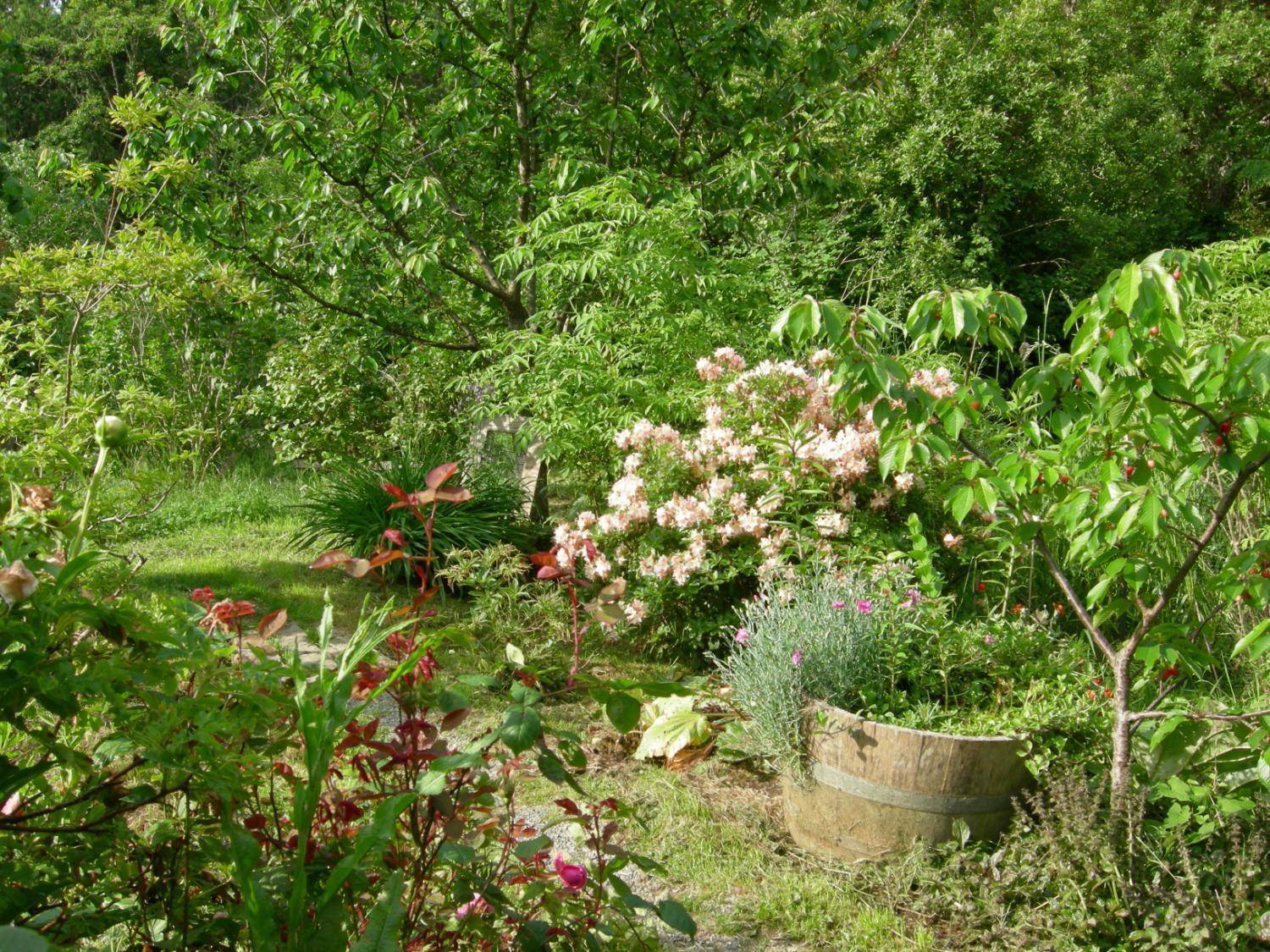
Food-forest-garden-1500 × 1125In my own backyard, plans advanced this week for our composting experiment and planting of a mini food forest. Edible landscaping! Bring it!

Here’s what my minister, CJ McGregor, just posted on Facebook:

Imagine growing our own avocados, mangoes, guava, papaya and other tropical fruit…..right here in our congregation’s back yard. Imagine abundance and offering fresh and organic fruit to migrant workers and their families. Imagine children who are hungry when school is not in session being offered a place to help grow and enjoy the literal fruits of their labor. Imagine inspiring the next generation to understand and respond to the real and devastating effects of climate change such as food shortages. Imagine the connections. Imagine vacant spaces on our campus becoming a grove of plenty. Imagine healing a bit of our community.

IMAGINE.

What the Frack?

Climate Fixes and Plan B’s: The IPCC’s Guide

Cinderella Technologies

The Energy Collective

If You Build It…

First, it was avocados we’d have to learn to live without.  Now, it could be coffee.  I like both…a lot, but I have an inkling that when coffee starts getting as expensive as Dom Perignon, it just might spark a million person save-the-biosphere march in Washington.   Hey, I can dream, can’t I?

coffeeI’ve been around long enough to remember a few marches, and even marched myself.  Sometimes, it had the desired effect, e.g. the anti-Vietnam War that effectively ended it.  Civil Rights, although it didn’t wipe out racism.   The equality for women movement, although we still earn significantly less than men.  As a participant in the 2013 Walk for Our Grandchildren, I feel solidarity with student protests against the KXL pipeline, even though marching is nowhere near enough.  In fact, perhaps it draws time and energy from more practical things you can do to reduce your personal carbon budget.

For our local Bike to Work Day last week, a friend of mine rode her bike 10 miles to and from her office, over an hour each way.  She was sore and elated.  Who wouldnt be?  But like a march, this is a one-off, a gesture, more demanding than recycling our plastic waste but, in the long run, less effective than, e.g. giving up driving entirely; stop flying; shopping only at thrift stores; growing your food; creating a sharing network, time bank, or Transition Initiative.

As if the news (well, it was hardly that!) wasn’t dire enough, I am concerned that it might spawn an outbreak of fatalism.  One of the most chilling quotes came from Mark Bittman’s Op-Ed April 1: “I guess I can stop worrying about my grandchildren,” as in, it’s now time to worry about ourselves.

In response to the latest IPCC report, Rob Hopkins did an amazing roundup of Transition activities around the world, what seems to be working, what isn’t quite there yet, and what could be more effective.  I urge you to click on the link and read it in its entirety, especially if your spirits, like mine, are in the basement.  For one thing, there are now over 1,000 Transition Initiatives, and 75% of them consider themselves successful.  An independent study noted that:

“… these initiatives have been shown to be effective in bringing about behavioural change and in helping to establish new norms in society.  The wider application of these approaches must, therefore, be seen as an essential element of any broader strategy on climate change.”

And this is being accomplished with “a markedly non-adversarial approach.”  It’s Gandhi-like, modeling what is possible and letting people see that it works, and how it works.

“The most radical thing sometimes that you can do is actually vote with your feet and vote with your dollars,” says Andy Lipkis, founder and president of Los Angeles-based TreePeople, quoted in an interview with Hopkins.  “We’re hacking the system and making it so much better.”  This would be worth doing even if climate change wasn’t on our doorstep.  If you build it …


Dog Days for Deniers

It has been a rough week for professional climate change deniers, and it couldn’t happen to a more deserving bunch of people!  By professional, I mean those business interests whose deep pockets fund the status quo in all its forms, at the expense of the rest of us.

The American Association for the Advancement of Science—the world’s largest general science society—released a public information campaign called What We Know, to “present key messages for every American about climate change.”  Then, The New York Times, which is increasing its coverage of the issue, weighed in, stark visuals of disappearing deltas and threatened islands included: Borrowed Time on Disappearing Land,  Rising Seas and Worst is Yet to Come. If you donate to the Environmental Defense Fund or other environmental group, you’ve seen plenty of photos of endangered species.  But how do you respond when it is our own kind in the cross-hairs?  Example (albeit extreme): a Bangladeshi mother who loses her land and livelihood to rising seas, sells her son into indentured servitude.

“Climate change will soon be everyone’s problem,” is one comment to the Times reports.  “It already is,” says a friend and Transition colleague who heads up an ecological arts nonprofit organization.  She spends her time, much as I do, focused on ways to inspire and motivate community resilience in our vulnerable and deeply-in-denial adopted state of Florida.  We are both grandmothers, informally members of the local chapter of Grandmothers Against BS.

Yet who, on a tennis-perfect day in Miami, watching Novak Djokovic beat Rafael Nadal for the championship, can be blamed for indulging in a little amnesia?Drive down to the recently opened Perez Museum and its neighbor, the under-construction science museum, check out a luxury, 154-unit condominium twin-tower with prices that start at more than a $1 million, all located on high-end Biscayne Bay.  What data points are developers using that underpin such hubris?

1541284_FI_1007_southbayteardown_001_RL

Real estate is big business here, so I am riveted by some of the strangest examples of  business-as-usual in full view, inspired by a real-estate craze on the California coast.  You could be fooled into thinking this photo depicts the aftermath of Hurricane Sandy or an earthquake.  In fact, it is a teardown,  a way to keep a high-value location — waterfront property, this being Florida — to destroy in order to create.  Is this any way to prepare for High Tide on Main Street?  Is any attention being paid to information readily available at the touch of a keyboard, e.g. a report to Congress by David W. Titley, Read Admiral USN (Ret.), Ph.D.?  “Today in Miami Beach at high tide,” Dr. Titley told the House of Representatives Committee on Science, Space and Technology, Subcommittee on the Environment, “storm sewers routinely back up and flood seawater onto the streets they are supposed to be draining.”  Whatever you are building, doesn’t this sound like a good time to adapt to the risk of flooding, consider raising your structures on stilts, not to mention installing solar panels to capture all that free sunshine? Inside the business-as-usual bubble, no one is aware of risky behavior or motivated to consider a different set of possibilities for the future.  I used to live in a similar bubble myself, albeit on a smaller scale.

Full disclosure: Once upon a time, we had a vacation home on the San Andreas Fault.  Our kids thought we were nuts.  But we got used to frequent tremors, made it through the Northridge Quake, and after things returned to ‘normal,’ went back to casual speculation about The Big One.  It was a California thing.

Call it maturity or becoming an elder.  I don’t feel quite so light-hearted about my current home in coastal Florida, or the prospects for my family, friends and neighbors here, or anywhere, for that matter.   That’s why I do what I do, knowing that Transition is a social experiment with no guarantee of success. That’s why I keep Rob Hopkins’ Cheerful Disclaimer in my mind.

• if we wait for the governments, it’ll be too little, too late
• if we act as individuals, it’ll be too little
• but if we act as communities, it might just be enough, just in time.


Transition Free Press: Slow News

TFP img_20130130_190624

The words ‘free press’ are always going to get my attention, and not only because I once worked at – and adored — a daily independent newspaper whose editor was known for straight-talking opinion pieces.   By the time it was shuttered by the military dictatorship that took over my country, I was – unlike said editor — safely out of harm’s way, and yet I felt the loss.  Freedom of speech is a given in Western democracies, and we’ve made heroes of comedians like Jon Stewart for their sharp, fearless pursuit of what’s real.   And yet…

We live with media 24/7, steadily exposed to sophisticated and nuanced blurring of facts, opinion and motivational message.  Anyone can learn to Tweet effectively.  On Facebook, you can be Someone.  Where are the fact-checkers?  Facts are ‘marketed’ so they can be easily digested by the targeted demographic (see my last post).  Most of us get our news from television and the Internet, attention grabbing clips repeated, sound bites (like political slogans) designed to lodge in brains made lazy by a steady barrage of infotainment.  Wag the Dog, all over again.  Or TMI?

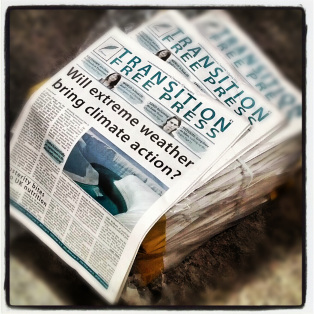
So why relaunch Transition Free Press (May 2014), a print newspaper you can hold in your hands, copy, highlight, and pass around?  It seems so throwback, retro, so slow.  Exactly!

…many of us want to explore and voice another sound, another story. One of those stories is about the Transition movement, in essence how we, as a people and as a network, respond to the triple drivers of climate change, resource depletion and economic breakdown.

 [Transition Free Press] is a publication in its own right: it is not part of a corporate strategy, or a mainstream business. It is pure editorial run by seasoned Transitioners, and in a time where the media is controlled every which way by government propaganda that is an extraordinary thing.  ~ Charlotte Du Cann, editor

Here’s my gift to you:  a sample edition of Transition Free Press. http://issuu.com/transitionfreepress/docs/tfp_1final_online to page through on your screen (for now).  If you’ve wondered how people all over the world are responding to crisis…You can in the space of a few minutes flick through 24 pages and see what Transition means as a culture, a whole new way of living on the planet. It’s a multi-voiced operation. It’s a We thing. During the pilot over 100 contributors wrote stories, telling us about their projects, writing them from the field, from experience. Here I am! Here we are!

Embrace it.  Become a subscriber (I did).  Share Transition Free Press with your Transition group or wanna be’s.  Talk about it.  Learn from it.  Slow news we can trust and put to use.

Charlotte Du Cann also writes a stunningly erudite blog at  Charlotteducann.blogspot.co.uk,

What’s Your Position As The Ship Goes Down?

This Low Carbon Life Archive

Want everyone else to buy into environmentalism? Never say “Earth”

Wrote about the communications issue here: https://transitiontales.wordpress.com/2013/08/ Think I need a new tag line for this blog!

Downtown Alleys

“Let’s start the day with a revolution – one that happens inside your mind!  It is not about thinking outside the box, but rather realizing there is NO box to begin with!  ~ Sherryl Muriente

Back alleys don’t usually get much respect, and the alleys of West Palm Beach are no exception.  FAU School of Urban and Regional Planning instructor, Sherryl Muriente, aims to change that, with the help of her students and a diverse group of area residents and organizations.  We came together at C’est La Via – Rethinking the Alleyways, a visioning workshop held at 312 Clematis, a gallery on one of the busiest downtown streets.

Downtown Alley2I got invited because Sherryl had read a Transition Tales blog post and saw synergy between Transition and her passion for this work.  Indeed there is! After she messaged me, we spoke at length on the phone and I got very excited about the concept of urban acupuncture: small-scale interventions to transform the larger urban context.

Yoga, which I practice and teach, offers something similar: small, incremental changes in the body/mind that add up to better health and relationships over time.  Transition works like that, too: small groups of committed people who just do stuff with what they have, right where they are.  The core group was FAU graduate students, eager to interact with the community to make things happen.  I chatted with Jesse Bailey of  West Palm Beach Downtown Association who blogs at WalkableWPB (read his post about how Asheville redesigned itself into one of the most livable cities in the country), and with Aaron Wormus, creator of the lively blog, A Guy On Clematis.  My Transition colleagues, Mary Jo Aagerstoun of EcoArt South Florida , Ashley Moore of Permadigm Initiative, and my ever-supportive spouse, were in the group.   My tribe!

downtown alleys3“Think from your gut,” Sherryl instructed us, as we trooped out into the alleyway parallel to and south of Clematis to see what we had to work with.  It was a cool evening; the light was lovely, and the excitement infectious.   The block-long alley is perfect for pedestrians and has, as they say, good bones.  Better lighting and lots of paint would do wonders, of course, but through the lens of Transition, it wasn’t difficult to envision edible landscaping planted in a lovely courtyard; an instant community garden take shape in an open lot; murals on the walls of the narrow alleys; food carts, a mini-farmers market, sidewalk cafes, musicians, puppeteers and other street performers.  It could become a mini-festival; a win-win for building owners, merchants, residents and visitors.

Everyone was abuzz with ideas.  Soon, we would have a chance to share them back in the gallery, as helpers scribbled words and pictures on flip charts – Open Source in practice!  It made me think of Rob Hopkins’ description of Transition as more “party than protest” and exactly the model I aspire to for Transition Palm Beaches.

C’est La Via will be meeting against this week to talk about where we go from here, and April 12 has been tentatively set for our work day.   Let the revolution begin!

WalkableWPB

AGuyOnClematis

Why Compost?

Because it is a zero waste strategy ~ Because it restores and remediates the soil  ~ Because it is quiet activism you can do without leaving home or carrying protest signs

Today, thousands of young people like Rachel Walsh of Transition Tallahassee are in Washington to protest against the KXL Pipeline, much as my spouse and I did last summer in the Walk for Our Grandchildren.  Standing up, speaking out, boycotts, even subjecting one self to arrest, are effective ways to oppose injustice in all its forms.   If enough people participate, e.g. Gandhi’s march to the sea, the March on Selma, even the original Boston Tea Party, these actions can rock the known world.

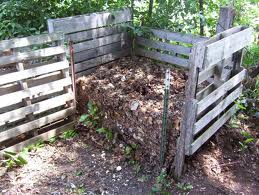
Jean's compostWhat if take-to-the-streets activism of this nature isn’t in your nature?  Food activism, in which composting is a key element, is the perfect local DIY project that contributes to a healthier, more sustainable community right away.  As the documentary, Symphony of the Soil (now available in DVD) showed us, reclaiming our soil even on a small-scale can be effective because everything is connected.   Doesn’t it make sense to convert yard trimmings and organic food scraps – yes, even conventionally-grown vegetables – into next growing season’s soil instead of paying to have them removed?  Not that I’m advocating any more lawns for South Florida however much carbon they might sequester, but this is Green Gold just waiting to happen.  Take a look at Composting 101 from the US Composting Council, a national, non-profit and trade association, and see how this all works.

Composting is very much on my mind these days because, thanks to Margaret and Norm Robson, two revered elders and pillars of my UU faith community, we are going to soon have a place where we can put these ideas about composting into practice – a mini-revolution in the making.   We do a fair amount of food service already, some of it prepared in our commercial-sized kitchen, and every Sunday there is an ample deposit of coffee grounds.   Habits are sticky, so I don’t have any illusions that it will be easy to get everyone on the composting bandwagon right away.  Even if we convince half of our congregation to participate, this will be – like our vegetable patch and butterfly garden – another small model to practice and experiment with.  Nonetheless, I am optimistic because activism is a core principle; we already support Fair Trade coffee and chocolate with our purchases; we recycle clothing and household items through our thrift shop.   Small, committed effort works; it is “the only thing that ever has.”

If you are among the shrinking number of people who grew up on a small family farm, the value of composting will not be news to you.  I didn’t, yet managed to glean a little bit of knowledge from my generous next-door neighbor who grew the most flavorful, succulent New Jersey tomatoes in a small bed in the middle of his back lawn, using coffee grounds and egg shells as fertilizer, and picking off the bugs by hand.  Another source was a family elder who would enrich the soil around his citrus trees with ground up fish bones.  I experienced my first Victory Garden in the UK, carefully tended  by my aunt and uncle, who would bring what they couldn’t consume to the weekly farmers market in the main square.   It was a small supplement to their modest income, and a social time for them.  It’s no surprise that the Transition Movement is flourishing in the centuries-old small town cultures of Europe.

Most of us of a certain age have memories of food coming directly from local producers, unmediated by supermarkets, which is one reason I believe our compost benefactors are so enthusiastic about this project.  Possibly they share many of my environmental passions although it’s hard to imagine them hugging a tree or chaining themselves to a fence.

It will become increasingly important that we share our memories of where food comes from with our grandchildren, especially if they are urban- or suburban-raised and can’t tell a carrot from a cabbage when it’s in the ground.  Accompany them to the farmers market – better yet a real farm! — and let them see, smell and taste for themselves.

Let’s all remind ourselves that, as Wendell Berry wrote: “Eating is an agricultural act.”  It is also an act of social activism.  Composting completes the cycle, transforming our so-called waste into next year’s crop.  So it has been, and could be again, but only if we understand and act accordingly.