A New Take On Giving

Trust Center for a New American Dream to come up with a new take on giving just in time for the holidays.  It’s called So Kind, the Alternative Gift Registry, and I love, love, love it!  Anyone can create a registry for any occasion and samples include a wedding registry and baby shower.  Most of the gifts are not stuff, no surprise.  It works a little like a time bank in the sense that you can make requests and/or offer gifts.  The best kinds of gifts are enjoyed by both giver and receiver, right?

christmas_gift_187449I’ll admit I get nostalgic for Christmases past when my children were little and contented with one or two well-chosen items.  I even liked assembling those sleds and other things with many moveable parts — an evening of playing Santa’s Elf, sipping a glass of good Cabernet, after the children were tucked away.   Of course, the boxes were often more interesting and conducive to creative play than the toy — wagon, doll house, etc. they held — and although I haven’t taken a poll on this, I suspect that may still be true.   I’m no cultural historian, so I can’t put my finger on exactly when things got out of hand with holiday gift-giving, both in terms of the duration of the retailing season leading up to Christmas Day itself, and the outsize expectations to which we have become conditioned.  Cars?  Really?

All I want for Christmas this year is to disappoint a few Big Box stores, and to reward people who think out of the box about where we are going as a consumer culture.  Recently, Transition founder, Rob Hopkins announced that he quit Amazon (they didn’t make it easy).  His thoughtful, timely essay about what this means is just such a gift.  It came one day after 60 Minutes (and Panorama in the UK) did reports on how Amazon operates and its plans for the future, e.g. 30 minute delivery of your package by drones.  Maybe it’s just me, but I think the money we’re spending on these clever solutions to very trivial ‘problems’ could be better spent elsewhere.  An end to hunger and homelessness?  Relief work around the globe?   If you are of like-mind, you might consider this a good time to make gifts in a friend’s name to Paul Farmer’s Partners in Health or Doctors Without Borders (USA)*, to name just two necessary organizations.  These are also gift alternatives that will keep on giving when the last bit of tinsel has been vacuumed off the carpet.

*Both are highly rated by Charity Navigator, which could also use your support.

10 Ways to Defeat Post-Project Blues

Top 10 winnerPost-project blues today, as the intensity of the last weeks on Symphony of the Soil begins to retreat from my body mind.   Cheer up strategy: Top Ten things I want to appreciate and remember:

  1.  Deborah Koons Garcia is a true visionary, and as un-Hollywood-ish, unassuming and nice as the girl next door.  No assistant; no entourage; no problem.  Even accepted a congratulatory kiss on her cheek from my spouse.
  2. So far, I’ve done no postmortems re: what could have gone better (maybe I’m done with that for good).  Better, some thoughts about where to go from here: Sow It Forward How to fund your garden. Maybe an herb and butterfly garden for my congregation.
  3. A couple of dozen friends attended or bought tickets even if they couldn’t (thank you!), and everyone who saw it was moved by the film.  May its message lodge in their hearts and minds.
  4. Kindness of strangers, e.g. the Muvico staff are helpful and very nice, especially the manager named Minty.
  5. Teaching myself how to use Twitter effectively (even about hash tags) and connecting with some journalists I hadn’t known before.  Fun!
  6. Walking the mile from the parking lot behind Clematis up to City Place, confirmed that West Palm Beach is a very likable, liveable city, and even has a hill (well, for Florida).
  7. The margaritas at Longboards (upper Clematis) are world class!  Especially when you are thirsty for one and indulge infrequently.
  8. But Malpeque oysters at $3 a pop?  Not even for this foodie.  Great blackened Mahi tacos, though.
  9. Crowded into a booth with some interesting new people at the post-event reception.  Laughter non-stop.  Food-sharing.  My scene.
  10. This has made me ultra-ready for a Slow Thanksgiving.  Slow Everything.  Next event I’m planning, a ‘memory potluck’ for Slow Food Gold and Treasure Coast.  Everyone brings a dish with a story behind it, and shares both.  Tweet me if you want to come @MarikaStone1

Image credit: http://www.mariaandtom.com/agent_files/top-ten-blue.jpg

Food Politics Can Be Funny!

Rain, yay!  My two little vegetable plots will be so happy.  Perfect day to prepare for the first meeting of the North Palm Beach Slow Food Book Club this week, courtesy of Slow Food Gold and Treasure Coast and Books-a-Million in Jupiter, November 13, 6-8 pm.  Our first book, Marion Nestle’s latest title, Eat Drink Vote, is not only a wry nod to the earlier best seller on a completely different Eat-Drink-Vote-Cover-Imagesubject, it is also wry on its own account, which is a good stance to take in the world of food politics.  By that I — and the book, mostly — mean the disconnect between what is known to be healthy for humans and what provides the most profits to those who grow and process food, and the role government plays (huge!).  Food politics, of course, also plays out in more personal ways when people who have every right to seek out what is best for their own health, turn it into a food fight.  But that’s a topic for another time, maybe.

It seems especially poignant to be reading Eat Drink Vote a day after the banning of trans fat, which gives me hope that eliminating HFCS and GMO seeds from American food production may also be possible in my life time.  And it’s probably no accident that I’m reading this book during a period of concentrated work on Symphony of the Soil, which comes to a close November 17 with the local screening.  Healthy soil = healthy crops = healthy food.  Thank you, Deborah Koons Garcia!

How we feed ourselves and the impact on the environment (soil, water, air) and other creatures have been inseparable concerns since the summer day I found, in a Cape Cod vacation rental, a little book called The Higher Taste compiled by The International Society of Krishna Consciousness based on the teachings of its guru.  I won’t say everything in that small volume resonated with me, but it did make me quit eating red meat.  And if that wasn’t enough, my work in public relations took me to a meat packing plant in the Midwest around the same time.  Frances Moore Lappe’s Diet for a Small Planet followed and more recently the work of Mark Bittman and Michael Pollan.

So, what do you do with a book that is almost 50 percent cartoons?  Exactly.  So I already know I’m not going to learn a whole lot from Eat Drink Vote about how we got into this mess.   The very first cartoon is on the cover — an upended pizza slice labeled New Congressional School Lunch Food Pyramid — will tell you where Nestle is going.  And I also realize that Fixing the Food System: The Food Movement (Chapter 10) depends upon “participants in this movement [voting] with their forks every time they make a food choice.”  This is the only way to get something done in our democracy, it bears repeating.  So, even though Eat Drink Vote is preaching to a convert, I love a good argument, especially when it tickles my funny bone.

The Dark Side of Stockpiling

foodstorage copyIf you’ve visited your local hardware store (yes, a few still exist), you may have noticed that the canning section is much larger and better stocked than it used to be a few years ago.  A larder like the one pictured here would be familiar to member of The Greatest Generation (that of my parents) who understood what it meant to preserve, conserve, repair, and maintain.  These skills about preparing for anticipated shortages or disruption in supply are slowly coming back into fashion, like vegetable plots and backyard chickens.

Usually, the only time serious stocking up enters my mind is during  hurricane season, an annual ritual for Floridians and blessedly unnecessary in recent memory.  But I started to thinking about stockpiling a little differently after a conversation the other night with someone who used to work for one of the largest retail conglomerates in the country.  He and I agreed that the public response to global warming lacks appropriate urgency, but as a businessman, he had a novel — to me — idea as to one possible cause.  At least some of it had to do with stockpiling, he said, and he offered the following example.  His cable provider (and ours) has the technology to greatly improve its service to customers, but is apparently hampered by the fact that a lot of money is tied up in hardware dedicated to the existing system.  Until that was used up, the logic apparently goes, upgrades don’t make economic sense.  It’s like my friend who understands why she needs to switch ASAP to energy-efficient CFLs, but wants to use up her current supply of conventional light bulbs first.

Setting urgency aside for a moment, this seems a crippling form of scarcity mentality (vs. abundance, see Stephen Covey’s 7 Habits of Highly Effective People) and I began to wonder how pervasive it really is.  I didn’t have to look too far to find out.  Banks?  Definitely, hoarding cash during the recent government shutdown, on the premiss that there would be a run by depositors a la the Depression.  But, more weirdly, also after the TARP bailout, despite the understanding (unregulated) that they would put the cash into the economy.  In 2012, U.S. Corporations broke records for stockpiled  cash — $147 trillion.  Might  not some of that wealth have helped alleviate unemployment?  Even Apple Computer is reportedly hoarding cash at an unprecedented rate, 70% of it overseas. And then there are all those spare auto parts tucked away in dealerships and repair shops all over the country, standing in the way of a more robust adoption of the EV.  Remember the EV1?   Could it be deja vu all over again?

I think my adopted state is in for some difficult times ahead as sea level rise and salinization of the water supply begin to impact the most vulnerable communities.  We are going to need an abundance mindset to get through it, not the zero-sum game of scarcity or mattresses stuffed with cash or coin.

Too Big to See?

“Sometimes the fate of the Earth boils down to getting one person with modest powers to budge.”   So writes Rebecca Solnit in a recent HuffPo piece,  Bigger Than That.  She describes what happened when a bureaucrat defending the status quo (because he is stuck in ‘ordinary-time’ thinking) meets Divest activists who want to defund the fossil fuel industry, one endowment at a time.  The article itself is bigger than that and  worth your time.  Solnit is well-versed in, and passionate about, her subject yet manages to inspire optimism against all the odds.

The_Elephant_in_the_Room_Banksy-Barely_legal-2006

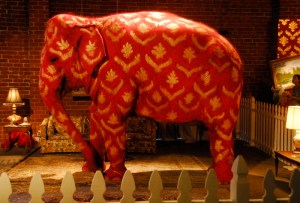
That climate change is the elephant in the room is a cliché.  We get a lot of support for failing to recognize the big, obvious issue that we are all, to one degree or another, complicit in the melting of Artic ice, drought in  Australia, forest fires and monster storms.  It’s easy these days to blame media, corporations and government lackeys for inaction on global warming.  It can make you feel powerful, yet is a waste of time and energy, of which we have neither.  Better to find the one thing you can do, and do it, because if nothing else, it can be a very humbling exercise.

Support the divest movement if you can’t physically join the students at Harvard or Brown calling their respective schools to account.  Hooray for The Harvard Crimson taking a stand in an Open Letter to President Faust: …we believe it will take the world’s most renowned academic institution to reign in the world’s most wealthy, powerful, and destructive corporations.

Today, Congress is negotiating the Farm Bill.  Do you understand what this could mean for the future of food in our country?  Why are so many people opposed to GMO seeds?  Who is Vandana Shiva anyway?  Why is the  health of our soil vital to life on the planet?  What is Rob Hopkins, founder of the Transition movement, up to these days?  How does the Slow Food movement fit into the big picture of climate change?   More questions.  Few answers.  I have made food security my thing because I can. What’s yours?

Here’s Wendell Berry on Moyers and Company recently: We don’t have a right to ask whether we’re going to succeed or not. The only question we have a right to ask is what’s the right thing to do? What does this earth require of us if we want to continue to live on it?

From Consumers to Producers?

We Can Do It! Rosie the RiveterIt must be something in the air or drinking water, but I am coming across this consumer vs. producer idea more and more lately.  Just today, someone posted on Facebook a story about how Cuba, which became an engineering and technological wasteland after the US left and the Soviet Union’s economy stalled, has pulled itself– out of necessity — into the 21st century by a new DIY ethic – one might even say ‘chic.’

The other item that floated to my desktop was that in Greece, whose economy is in dire straits,  young people have given up looking for jobs in urban areas and are going back to the land.  The reason they can is that, somewhere in their backgrounds, there is a homestead that belonged to a grandparent or other relative, a house and a garden in a village.  Romantic?  I doubt it.  Practical, yes.  They are returning to places where they can learn what previous generations took for granted about self-sufficiency and making a decent life without so goddam much stuff.  Many are taking up farming or learning to prepare food.  They are acquiring survival skills and building community at the same time.

Maybe these are important models for us to study in the post-consumer age we may be entering.  Consumers  — especially those wired to their electronic ‘friends’ — don’t generally make for great neighbors.  But people who make things (or create ideas), have to connect with others: mentors, partners, co-workers, and customers.  Producers live in a world of ideas and possibilities that encourages generativity, in the sense of “making your mark” on the world, creating or accomplishing things that matter.

It’s not too late to get our hands dirty, to build things, to maintain and repair the things we have, to share our new found skills with others.  In fact, in a future where the cult of go-it-alone individualism is sure to be severely tested, it is about time.

Photo credit: Mike Licht, NotionsCapital.com / Foter / CC BY

Revolution: Orderly and (Mostly) Quiet

As revolutions go, the local foods movement is relatively well-behaved and filled with activists who are not afraid to get their hands dirty.  Its goal is ambitious: to get people to  switch their allegiance from farm products shipped thousands of miles at an unsustainable carbon cost, to locally-grown and raised foods.  If enough of us do this, the reasoning goes, we will not only have fresher, healthier foods to eat, we will develop community resilience that can withstand disruptions in the food supply chain many foresee as inevitable as the climate changes.

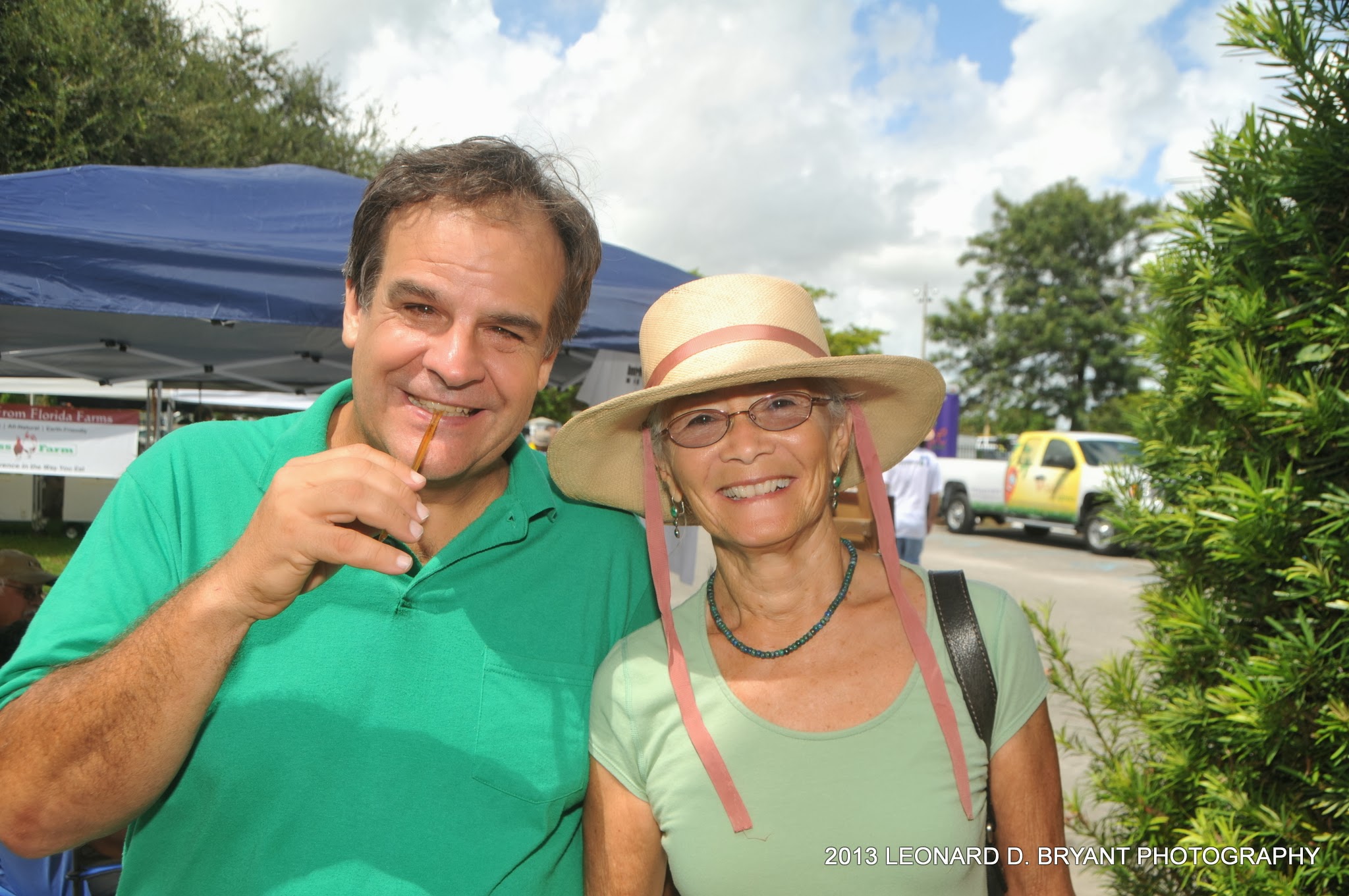
In Palm Beach Country where I live, the movement is embryonic compared to, say, the San Francisco Bay Area or most of the state of Vermont.  But on a sunny Saturday at Gray Mockingbird Community Garden, with the lively sounds of the Lake Worth High School Steel Drum Band making my feet tingle, it was possible to dream big.  The occasion was Local Foods/Local Gardens and I was on hand Brian and Marikawith partners, Brian Kirsch of Gray Mockingbird Gardens, Mary Jo Aagerstoun of EcoArt South Florida, and my spouse, Howard, to talk up and sell tickets to a special screening of Symphony of the Soil, a  documentary by award-winning filmmaker and Palm Beach County native, Deborah Koons Garcia,  November 17 at the Muvico Parisian in City Place, West Palm Beach.  The film makes a powerful connection between reclaiming our soil (and farms) from Big Ag and food security for all of us.

The timing could not be better.  In about a year, Solid Waste Authority which has been providing free compost to local backyard and community gardens in Palm Beach County, will phase out of this service.   The screening, and a Q&A with the filmmaker and other local soil and gardening experts, is intended to help launch a conversation with all parties concerned on how to address our composting needs in the future.

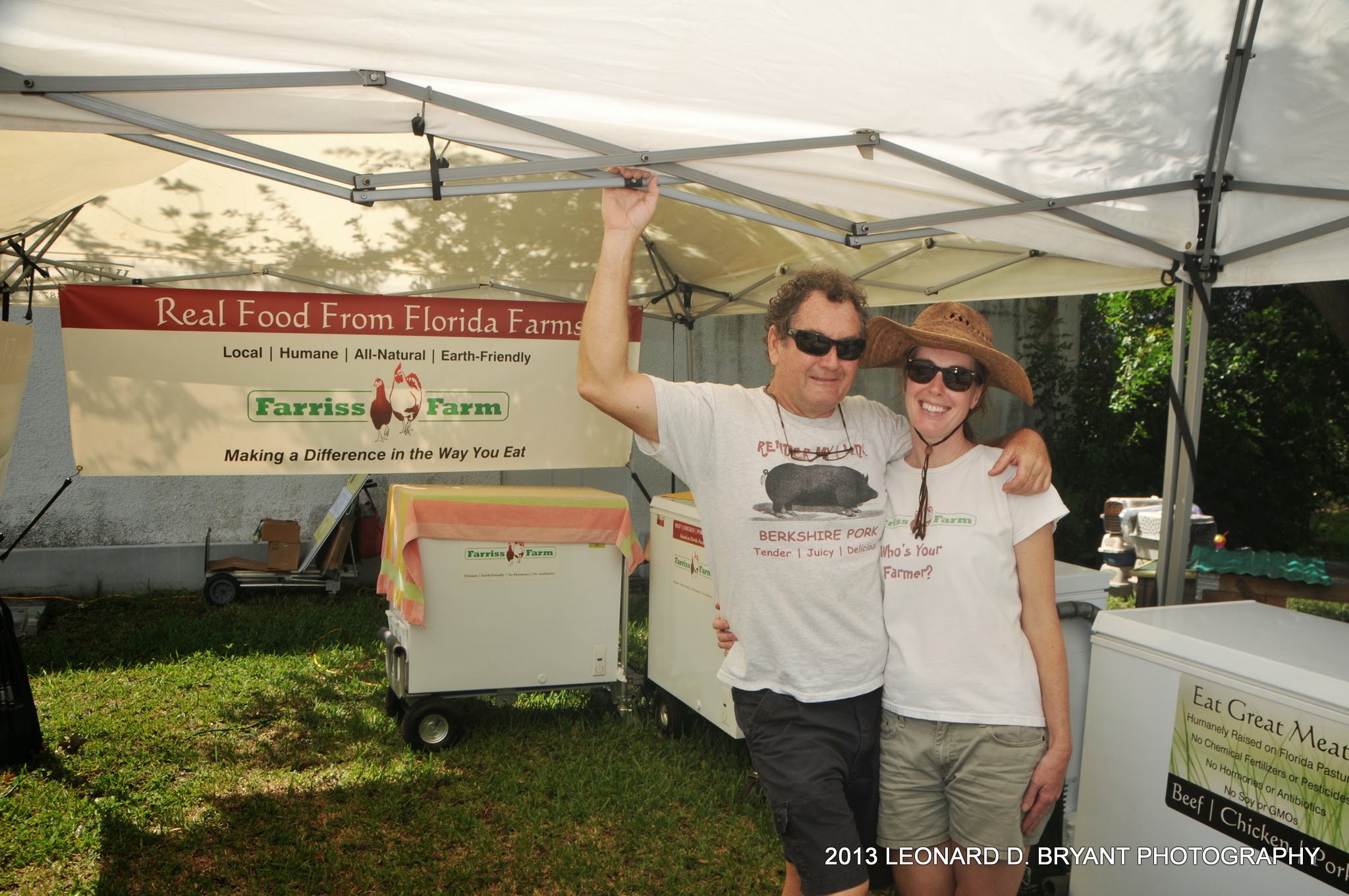
Robert and Paula FarrissWhen I wasn’t in the Gray Mockingbird booth, I was schmoozing with people like Robert and Paula Farriss of Farriss Farm who offer free-range eggs that taste like eggs, and  100% grass-fed, pastured livestock.  The term ‘pastured’ denotes animals that have been raised humanely, without hormones and antibiotics because, simply, they do not need them to thrive.  It is encouraging to know that there is a burgeoning market for products like this, for both health and ethical reasons.  I’m not likely to be a convert to mammal meat (though I have recently sampled pastured duck), but I do come away from conversations like this with a better understanding of why large herbivores are necessary for sustainable agriculture.

I had a good chat with John Zahina-Ramos of Just One Backyard about the challenge of getting the foodservice industry, restaurants included,  to understand how composting their vegetable scraps could actually impact their operating budgets.   John is an ecologist and  makes a convincing case for a more holistic way of agriculture.  JoJo Milano of Goodness Gracious Acres was also there, promoting her goat-milk based soaps.  Currently, unpasteurized goat’s milk cannot be sold as food for human consumption, a situation that I hope will change.  Joanna Aiken, Community Service Coordinator of Solid Waste Authority, also stopped by the Symphony of the Soil table and I feel confident we’ll work together well on a composting solution.  I bought some honey sticks from the Palm Beach County Beekeepers Association booth (yum!), and met Facebook friend, Susan Lerner of the Rare Fruits Council.

A fun morning invested in a cause I am passionate about.  Let the revolution spread!

(Photo credits: Leonard D. Bryant, 2013)

Thinking About Water

A water drop
sliding from the faucet
responds to the pull of gravity,
follows the path
of least resistance.  It will
find its own way back to the Source,
flowing through, over, under
or around any obstacles it encounters.

Have you ever observed
how the water molecule
cannot be separated
from others of its kind,
or how water assumes the shape
of whatever it is poured into,
or how amenable it is to change?

Have you allowed yourself imagine
the lengths to which water must go
before it returns to us,
as runoff, rain, mist, ice or snow?

What do you do with the knowledge
that six-tenths of you is water?
Do you wonder what would happen to you,
to everything you can see, touch, taste, feel, smell,
if water went away?

Howie at Grassy WatersWhen I was a teenager living in Rangoon, Burma in the 1950’s, water was not the reliable resource we take for granted here.  From 2-4 pm every day, water came through the tap, courtesy the municipality, and it was our job to store it in large wooden barrels located in the kitchen and bathrooms, to satisfy all our household and personal needs, including manually flushing the toilets.  Water wasn’t safe to drink without additional treatment.   We stored drinking and cooking water in recycled liquor bottles, and although I’d never heard of ‘gray water’ then, it was exactly what we were using for the small grove of bananas in our backyard and flowers in the front.

It was a lesson about how precious water is that I’m glad to say I have carried with me into adult- and elder-hood.  It really resonates today in South Florida where I live now,  at risk from too much of one kind (storm-driven flooding, beach erosion, and salt-contamination) and not enough of the other kind (fresh waters springs like Grassy Waters which supplies West Palm Beach).

If you think that a water crisis here (the topic of sea level rise is on most municipal agendas) will arrive before we feel the effects of higher prices for fossil fuels and everything that depends on them, you may want to deepen your own education about water as well as water usage awareness (Navy showers, anyone?)  Which is probably why I stumbled upon Last Call at the Oasis  (Pivot TV) one rainy (yes!) evening and was reminded just how extreme the water issue is.  It isn’t just that huge swathes of the Western  United States and Australia are suffering severe, crippling drought.  It is also that our predominant way of farming is poisoning our water supply even as its adherents (chiefly the biotech companies who profit mightily from pesticides and herbicides) claim we couldn’t live without their help.  And it’s also that energy generation itself  takes water to produce (see the University of Colorado link below), lots of it.

If you are like most people (myself included) you find education without the aura of crisis is much easier to absorb and process (which is the problem with so much that is written about climate change and the environment these days).   But I’m ready to swallow the pill, however bitter, if it means I can make some better, wiser choices about my future, and help others do the same.   Here are a few links to information I’m working with.

Water – University of Colorado Boulder — see the other videos too

Last Call at the Oasis

New York Times Review

Environmental Health News on Atrazine

Battling Syngenta

High Tide on Main Street

Signer 12,353 Reporting for Duty

You were the 12,353rd supporter to take action on ‘Stand Up to Koch Brother Obstruction’!  ~ Environmental Defense Fund

Every day, I get as many messages from environmental organizations I support (like the EDF) as from marketers or friends.  That’s a fact that worries me, although as a blogger, I am contributing to the ‘messaging’ without any real way to be sure that it leads to anything other than more of the same.  (I have the same concern about Facebook and other social media, and if someone wants to talk me out of that, I’m all ears.)

It isn’t that signing petitions and financial support, or even my 14-mile Walk for Our Grandchildren or the Climate Ride, aren’t important or effective ways to keep the focus (and heat) on the issues.  But we would be mistaken if we imagine these actions are sufficient given the acceleration of climate change and the big money obstructionism throughout all levels of government.  Not to mention that email blitzes about the environment are (mostly) preaching to the converted.  (Probably this one, too, but one can hope.)

Military metaphors are not my thing, but we ARE  in a fight to capture the attention (dare I say, imagination)  of a distracted, wired, over-worked population about the social and economic turbulence ahead wrought by climate change, if only to help them think clearly about its direct impacts on them and those they care about.

I believe all of us working on environmental issues could usefully study the Don’t Text and Drive PSA campaign now at your neighborhood theater.  Normally, I zone out while commercials run but these were impressively skillful: clever copy, great music, attractive young people (the obvious target, though by no means the only texting-addicted.)   See It Can Wait and others, readily available on You Tube.

Until recently (thank you, Bill McKibben et al for removing the gloves), U.S. environmentalism has been a “polite movement” (says journalist, Mark Dowie).  As Americans, we have been conditioned to prefer the simple and easy to swallow (however dire the reality), e.g.  Top 10 Ways to Save the Planet and its ilk.   We won’t ‘tweak’ our way out of this mess with ‘no interruption in service.’   Small steps matter as long as there are many of them, and of many different kinds, consistently applied (see the Transition movement).  As activists, we have to be as tough and relentless as the Brothers Koch, as savvy and creative as the best marketers, in making the facts known, our ideas heard, our actions powerful and enduring.

Maryland Takes Lead in Climate Activism

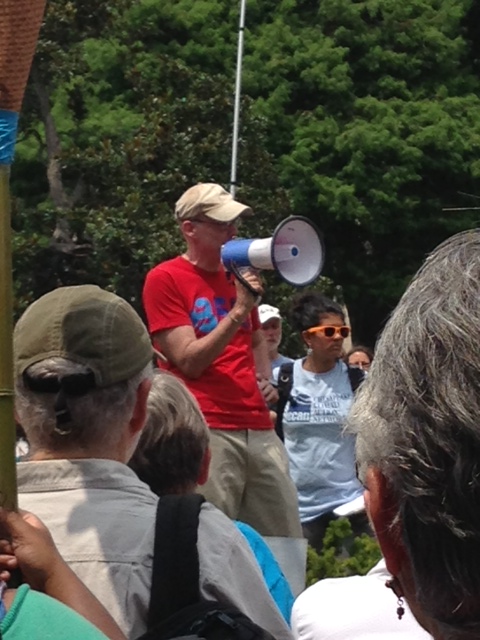
Bill McKibben DCYou might think, had you been at Lafayette Park for the Summer of Heat demonstration Saturday, July 27, that climate change is a fringe issue.  Under 300 people is my estimate of the crowd so in purely numerical terms, it was disappointing.  After all, as we were reminded by the Newseum exhibits, 200,000 people came out for Civil rights and more for the rally to end the draft and the war.  Numbers get media attention and often generate more numbers, so they remain a measure of a movement’s success. Yet numbers tell only a partial story at best.  So while we were a relatively small group gathered in Washington DC to cheer on the Green Grannies, the testimony of children, and listen with rapt attention to Bill McKibben, a great many people have begun to change their behavior as if the argument was settled decades ago (as it was).  Some of them are not afraid to use their positions of leadership to, well, lead.

Take Maryland Governor Martin O’Malley (we would!).  On Thursday, while participants of the Walk for Our Grandchildren were nearing our goal to rally at the White House, Gov. O’Malley offered a new plan for Maryland to a climate summit of hundreds of environmental advocates, scientists and business leaders.
He was blunt about the state’s “moral obligation” to address climate change and argued that retooling for sustainable goals will mean more jobs.

Chesapeake Bay Enviro Cntr2We didn’t have to look too long to see what is already happening in the state.  In Grasonville, MD, where we spent a couple of nights, there is the Chesapeake Bay Environmental Center, miles of trails through bay and wetland restoration projects, a summer camp and ongoing education.  In 2008 CBEC opened a new LEED certified arts and education facility to meet the growing needs of its educational programs. The new facility itself, the first of its kind on the Eastern Shore, is a demonstration site that ‘going green’ is feasible, aesthetically pleasing and economically smart.  It serves as a resource center for developers engaging in smart growth.  Florida, are you listening?