Healing Our World and Ourselves: Notes from a Conference

I write this — a documentary about The Eagles in the background — from Courtyard by Marriott down the road from The First Unitarian Church of Orlando where the Healing Our World and Ourselves conference is being held. This afternoon, keynote speakers, attorney David Cobb of Move to Amend, Sister Pat Siemen (Catholic nun and attorney) of the Center for Environmental Jurisprudence at Barry University on ‘the rights of nature’, and Canadian psychologist/addiction expert, Bruce Alexander, made for an electrifying panel on how their areas overlap and intensify each other. Some highlights from my notes.

Pat Siemen: “The planet has a right to exist.” She is part of a group working to introduce ‘the rights of nature’ into a new Florida constitution in 2018. “[We must] let the Earth teach us how to be.” Faith-driven initiatives have sparked movements for justice and human rights because ‘spiritual practice helps people sustain their efforts for the long haul.’ There is no ‘away.’ “We can’t sustain our lives without sustaining the Earth.” “We have to rediscover our ecological identity; unless this is our core, we can’t make the right decisions for the future.”

David Cobb: Move to Amend is much more than campaign finance reform, it is a movement to restore democracy. [Transitioneers, take note] Law follows culture [therefore] organizing at the community level, educating ourselves out of the existing paradigm, starting a new chorus, are the way to go. [We must reject] the ‘creation myth of the USA.” Cultural blindness has to be unlearned. Real change happens when people raise hell. The law is not about justice; it’s about consistency. I take you seriously [because you are here]. I take responsibility for doing the best I can. I release the results. [My comment: Right out of the Bhagavad Gita].

Psychologist/addiction expert, author of The Globalization of Addiction, Bruce Alexander: This is the first conference on addiction and the environment. It is not a coincidence that addiction and the destruction of the planet are happening at the same time. “We can’t win until we are brave enough to look at the machine itself.” The field of psychology has not contributed to solutions to environmental issues. Self recovery and social recovery are [or should be] the same. “We all want to live in a way that is good.”

There was also some lovely music including Samantha Moffatt on the dulcimer, and Dock Street performing an original song: Rights of Nature.

Tomorrow I’m on a panel (representing Transition Palm Beaches) to interact — “how can we help” — with the keynoters. An exercise in improv and courage which is definitely out of my comfort zone. I won’t let the sound of my own wheels drive me crazy.

Campus Divestment Campaign for the Rest of Us

Inspired by the Do the Math tour — and the math itself — I thought we might follow the lead of colleges and universities all over the country who are going fossil free. Naively perhaps, I dropped an email on the subject to our portfolio consultant at a well-known brokerage firm. Here’s what I wrote:

Thanks for your recent email and message addressing our concerns about the fiscal cliff and other political issues. Actually, we are far more concerned about climate change as the issue that trumps them all, and we want to make our investments support our values. Please purge our portfolio of fossil fuel and related companies. Here is a list provided by the 350.org campaign that has been used for the divestment campaign at universities and colleges across the country: http://gofossilfree.org/companies/

Easier said than done for the individual investor. After a couple of weeks of research, we got a phone call advising us that there were few mutual funds that met our SRI (socially-responsible investment) criteria. We were given the names and ticker symbols of two, with the caveat that neither fund could be recommended as meeting our overall investment targets. In short, they were more volatile for the conservative investment profile we had helped to create. In other words, we were on our own on this one.

What to do? What would Warren Buffet do? Apparently, he likes solar, healthcare and banks for Berkshire Hathaway, and he has convinced eleven more billionaires to give away half their wealth to charity.

Hmmm, could I take a page out of the Big Dog investment playbook? I was reminded of the conversation we had with a financial advisor a couple of months ago to whom we had come with the same concerns. She thought creating and/or preserving wealth (even in distasteful industries), enables one to fund causes in which one believes. It’s another way.

Speaking Up

Public speaking doesn’t terrify or immobilize me, but it’s not my favorite pastime by a long shot. I greatly admire those who can speak extemporaneously, precisely and with passion. I’ll add it to my bucket list. In the meantime, I look for and respond to any opportunities to speak about Transition because I figure the more I do of it, the easier it will become and the better at it I will be. But it’s not easy to strike a balance between reminding people of how bad things really are and inviting them to engage in a movement that, at the very least, suggests a softer, more resilient impact could be possible. So, now I’m gathering my energy for a presentation at my Unitarian Universalist congregation next week, and wrestling to get the words I want to say down on paper.

I dislike grandiosity in others and try to scour it from my own writing or speech. Yet I could not resist using quotes on the environment from President Obama’s inaugural speech. After all, his words are a major breakthrough in acknowledging the threats posed to civilization by climate change. They represent to me an intention, a direction, even if I have reservations about just exactly how ‘we will respond’ when his administration is also committed to supporting conventional energy production, fracking included. (And there’s the rub. As Einstein famously said: “Problems cannot be solved with the same mind set that created them.”)

What resonated with me was the phrase ‘We the People’ which Obama repeated several times. So, in the context of climate change, the word ‘we’ seems less about reassuring us that the government (and technology) will handle it, and more of a challenge to us all to take responsibility for how we have been, and may still be, contributing to a worsening environment, and where we can change our behavior. That is essentially what the Transition movement aims at: behavior change, one individual, household, neighborhood, town at a time, so that it will all add up to cultural shift from — as the saying goes — ‘Me’ to ‘We.’ That it may just work is what keeps me hanging in there, one blog post, speech, email or conversation at a time.

From Small Talk to Big

Since I began working in earnest on environmental issues, I’ve gotten really impatient with small talk. So people who know me well, know that if they ask me how I am or what I’ve been up to, I’m going to tell them, and sometimes they might wish they hadn’t asked. How I am right now is caught between elation and impatience. Elation because the tour I organized for Transition Palm Beaches to JustOneBackYard.com, the amazing experiment in urban agriculture being conducted by environmental scientist and Ph.D. candidate, John Zahina, was a success. About 15 people came and everyone was touched in some way by John’s passion and dedication. I am impatient because a. it’s my nature (and I’m working on it!) and b. change takes time yet whenever I get another email from Bill McKibben of 350.org, I feel overwhelmed by a sense of urgency.

The day before the vegetable garden tour, we took in a matinee of Singing in the Rain at our local theater with our subscription mates. We are at the getting-to-know-you stage and I know better than to start blurting what was on my mind (sea level rise statistics) during the performance that included a rainstorm on stage. Sure, I know that isn’t very mindful or in the moment for someone who has been practicing meditation for a couple of years. Nonetheless, there I was during the intermission honestly answering the question. How was I? Worried about climate change.

You can always tell when someone is not going there with you. Their eyes glaze over or they change the subject or crack a joke. But none of those things happened, in fact, I got to practice my elevator speech about climate science consensus, and how important it was for all of us to do our part to mitigate what is likely to be a rough patch ahead. And I was encouraged to continue over dinner after the show. Lesson learned: take a chance because this is no time for small talk.

Here in South Florida where I live, anyone who is paying attention knows it is not a question of whether sea levels will rise but when, how much, and what impact that will have on a population that prefers to live on or near the beach. Some of the most densely populated communities are situated on what is essentially a barrier island, the Atlantic Ocean on one side, the Intra-Coastal on the other. For us, beach erosion is a fact of life. Every year, even in those without major storms, some beaches shrink while others grow. But how would communities so dependent on high-end real estate and tourism respond if the beaches disappeared entirely?

Equally worrisome are water issues, e.g. the risk of salt contamination of water supplies, a topic that came up during the Just One Backyard tour, since John Zahina is a water management expert. How would that impact agriculture, food security? What measures could be attempted to keep that from happening? And at what cost? What if it doesn’t work?

Every time I Google a different part of this octopus of climate data, I get the sense a lot of it lies scattered in Army Corps of Engineers reports, utility assessments, various academic white papers, and in the things actuaries whisper to each other. What would it take to get these people and skills together? Now this would be Big Talk we need to have now.

Do What You Love…

Remember the Marsha Sinatar book, Do What You Love, The Money Will Follow? It was a precursor to the Law of Attraction craze, and like most things had enough truth in it to justify one’s attention. Well, I am not looking for monetary compensation for the environmental work I’ve dedicated myself to now, but something is definitely working in my favor. I am to be a panelist at the forthcoming Healing Our World Healing Ourselves conference in Orlando, February 15-16, and last night I met Jan Booher of the South Florida Climate Action Partners who is interested in having me present at her congregation, Unitarian Universalist Fellowship of Boca Raton. So, of course, my first move today was to get a much needed haircut, one that makes me feel like I’m getting back into the game after a number of years of contentedly teaching yoga and helping out with my grandchildren. (But, as I told my excellent hairstylist, it doesn’t mean a new wardrobe. That would violate my principles of reduce, reuse and recycle … and shopping in my own closet!)

Jan’s presentation of Southeast Florida Regional Climate Action Plan (RCAP) was riveting for me and I welcome the opportunity to participate in any action that promotes sustainability. I was glad to sign the I Support the Regional Climate Action Plan card addressed to county commissioners, and take some to distribute. That said, I always feel myself in a sort of parallel universe about the urgency of climate change hurtling toward us like an express train. Perhaps in my journey forward I’ll have to learn how to work with cool, rational, data-rich Powerpoint presentations, but it will be a stretch.

The Invisible Problem

This morning, while I did some kitchen chores, I listened to the Moyers & Company segment on climate change. Not one to soft-pedal the truth, Moyers had this to say about climate change action: Get it wrong and it’s over, not just for the U.S., for planet Earth.

Moyers’ conversation was with communications expert, Anthony Leiserowitz, who explained why, although the majority of people accept that climate change is real, it still remains an invisible problem. In part, this is because we humans are hard-wired to respond to immediate threats. We do not do as well with what seems remote. Because most of us don’t see what is happening, except for those polar bears, perhaps, it is out of mind. The Media has been notably reluctant to address the subject, but that is beginning to change.

The failure to adequately raise the alarm is complicated by many things, including the successful campaigns of disinformation that sow doubt. But it is also a communications problem itself. Or rather several. We who are working to change minds on climate change action have to learn to craft the message in ways that our diverse audiences — Leiserowitz says there are “six Americas” when it comes to the subject — will hear and respond. I recognized instantly that I am in Category 1: The Alarmed, those who accept that the majority of scientists and climatologists can’t be wrong, and want to — and are — doing something about it, however small that effort may seem weighed against the magnitude of the problem.

My efforts to communicate and educate so far have been focused within faith communities because addressing climate change, and the related issues of peak oil, indeed peak-everything, is both a moral issue and a social justice issue. As Katrina taught us, those who have less will suffer more, probably sooner, and take longer to recover — if they can at all. Although, as Anthony Leiserowitz pointed out, Hurricane Sandy didn’t discriminate between liberals or conservatives, Democrats or Republicans, million-dollar shore communities or small working class towns, material recovery has come soonest to those who could afford it. How we respond to the mutual threat of climate change is a matter of conscience, or should be.

The Message of Broccoli

Image

Apparently, you can’t hurry Mother Nature.  It took some experiments in container gardening on my patio and a raised bed plot at my First UU congregation to remind me of this truth.  About a week ago, I got tired of looking at these four broccoli plants that were producing abundant greenery, but no other signs of maturity, and I yanked them out for compost and prepared the pots for something else. Come to find that the broccoli sets planted at the same time in a raised bed (see above) suddenly decided to produce, right next to kale and chives and some tomatoes. This little harvest might only do for a meal or two, but it is part of a national movement to know where our food is coming from all the same.

I am no Master Gardener — though I know a couple — so my entire career as a micro-farmer has been entirely trial and error so far, probably like all farmers until the advent of agribusiness. Squash, I’ve learned, isn’t happy in a container. It puts out a tantalizing, bright flower, and then this small fruit appears and promptly drops off. Herbs get leggy, then woody, then inedible if you don’t keep them well trimmed.  Tomatoes, even the Heirlooms from Rutgers U. I bought in honor of The Garden State where I lived for decades, have a mind of their own no matter how many stakes and pieces of string you use to coax them into a nice, compact shape.  And broccoli, well, it is going to mature when it damn well pleases.

The flavor of our home-grown tomatoes and baby kale, and our twice-monthly box of vegetables from Kai-Kai Farms in Indiantown, are like the sun and rain on my resolve to get Transition going in my own town. And it makes it clear why many successful Transition Initiatives began with promoting local food before they tackle other categories of localizing the economy. The food story pretty much covers what’s wrong with business as usual. Produce that travels, even within the Continental U.S., is food that has burned enormous amounts of energy to get from farm to your plate.  It was bred and picked for shelf life and to survive transport in refrigerator trucks not to provide nourishment or pleasure. Real food is slow food grown nearby. That’s the message in the broccoli.    

Sharing About Sharing

From car pools and baby-sitting cooperatives to more formalized arrangements like vacation time-shares and the Zipcar*, we already know that sharing makes good economic sense.  But sharing also makes it possible to be green and cool and friendly like, to quote my favorite frog.

Oakland, CA-based attorney, Janelle Orsi, author of The Sharing Solution: How to Save Money and Simplify Your Life and Build Community, is passionate about how sharing can literally save our skins by saving our planet.

Yesterday afternoon, after my monthly Transition Palm Beaches meeting (which also includes a free-cycle table and seed swap),  I took a  free 75-minute TransitionUS tele-class with Janelle Orsi.  She led us through the simple sharing we do as a matter of course and how we can tackle the legalities of more complex ways of sharing, and thrive in an uncertain future. Access it here: Unstuck Economics: How Cooperatives and Community Enterprise Will Get Us Out of this Gigantic Mess.

Hers is a vision of a future worth investing in.

*Zipcar has been acquired by Avis.  It will be interesting to see what happens next.

There is such a thing as enough

“Speak the truth.
Speak it loud and often, calmly but insistently,
and speak it, as the Quakers say, to power.
Material accumulation is not the purpose of human existence.
All growth is not good.
The environment is a necessity, not a luxury.
There is such a thing as enough.”

http://www.donellameadows.org/speak-the-truth/

Speaking truth to power was a phrase that cropped up a lot during the last election cycle, so much so it lost its power.  Here it is reclaimed with credit due.  What if we could tell these truths?  Make them our own True North?   How might that change how we are as friends, neighbors and citizens?  How might it change the world?  Consider this an invitation to think about it with me.


71 and loving it!

71 and loving it

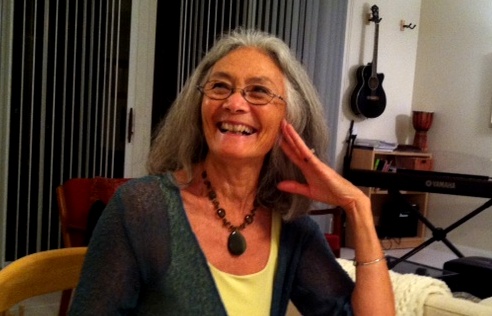
Me at my best: among family and friends, sharing a joke — what better way to celebrate a 71st birthday (last October).  It was the same month I did my second Transition Talk at Temple Israel in West Palm, determined to get better at this whatever it takes.  Next up, tour of Just One Backyard, January 20, 2-4, and second Transition presentation at First Unitarian Universalist Congregation of the Palm Beaches, January 24, 7 pm.

Latest brainstorm:  small group video screenings about how people are creating successful local enterprises followed by conversation and potlucks.  Shopping for a projector now, and flipping through The Soup Bible (a birthday gift) for ideas.  This may be the only way to change how things are: education, food, respectful communications.