The unresolved student loan crisis and the plight of debt-strapped graduates flipping burgers will keep this debate on the front burner for some time to come. But if you, too, have anecdotes about the taxi cab-driving Ph.D, or the electrician with a vacation home in the Bahamas, you know it’s not necessarily news, just more politicized –isn’t everything?
Google the question, or some version of it, and you’re likely to find plenty of opinions along the lines of former William Bennett’s (Reagan’s education secretary) “the broken promise of higher education,” the tagline of the book he’s currently promoting. Even Michael Bloomberg cautions students with so-so grades and large tuition bills to skip college and learn a trade like plumbing that can’t be outsourced or automated.
College is on the radar for two of our grandchildren who are entering their junior year in high school, and on the minds of their parents. One grandson took a workshop in entrepreneurship that enabled him to check out a school on his shortlist. The other took college level math at a local college to earn advance credits, earning an A and family accolades. Do they already feel the pressure of decisions they don’t have the maturity to make? I fear so. It seems to me that age 16 is a little young to be thinking about, let alone training to join, the workforce, especially when it is more than likely they will have several different jobs during their working life. (Young workers hold an average of nine jobs before age 32, according to the Department of Labor.)
I find it troubling that most forecasts about the ‘top jobs for the 21st century’ from U.S. Government sources are based on a paradigm of business as usual, that is, the growth model, plus the changing demographics — by 2050, the population of older Americans will double – that is expected to create demand in certain categories, e.g. the ‘top earner’ ranks of physicians, optometrists and podiatrists. Automation, that eliminated many of the well-paid manufacturing jobs of the past, is about to do the same for the service industry, see Humans Need Not Apply. And barely factored in at the moment: the business- and life-disrupting impacts of climate change that will call upon some quite different, humanitarian skills sets: resilience, conflict-resolution, communications, and empathy.
Who would want this chillingly Orwellian description of a Department of Labor “real work day” in “future time?”
5:30 a.m. get up/get dressed/exercise
6:30 a.m. make: breakfast, school lunches, grocery list
7:30 a.m. get kids up, dressed, and fed
8:00 a.m. drop off kids and dry cleaning
9:00 a.m. on the job . . . 12 e-mail messages waiting for reply
1:30 p.m. meeting at daycare center (your child is biting!)
2:30 p.m. back on the job . . . 8 voice-mails waiting
5:00 p.m. forward office calls to cell phone
5:30 p.m. pick up child from school aftercare
6:05 p.m. pick up other child, pay late pickup fee at day care
7:00 p.m. make dinner
8:00 p.m. do: dishes, homework, laundry
8:30 p.m. bathe kids
9:00 p.m. read work memos to kids as bedtime story
9:30 p.m. fold laundry/fall asleep
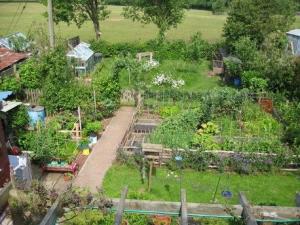 We can do better than this for our children and ourselves, and my friend and colleague in Transition already is. This week she wrote that her 18-year-old daughter had completed an online course in permaculture, and had decided to forego the conventional college route of so many of her peers to launch a career in this practice. When she gets her certification, Brennah will be able to practice permaculture in a community that sounds ready to offer her many clients. This choice of career is a natural extension of the family’s long commitment to homeschooling the children, living simply, and growing as much of their own food as possible — a decision they made when they lived in my part of the world, and are carrying forward in their new environment. As part of their self-directed curriculum, the children have already raised and cared for backyard chickens, learned about and foraged for wild edibles, and more recently, added bee-keeping to their repertoire of resilience skills.
I don’t think the family realized when they began just how cutting edge many of these practices would become. Far from a redo of the back to the land movement, permaculture is a highly sophisticated system. The word itself is a combination of permanent and culture, created (and copyrighted) by founder, Bill Mollison, Australian ecologist and university professor. There are many practitioners and definitions, but this one is among the clearest: permaculture is the study of the design of those sustainable or enduring systems that support human society: agricultural and intellectual, traditional and scientific, architectural, financial and legal. It is the study of integrated systems, for the purpose of better design and application of such systems. Rob Hopkins was a permaculture teacher and the Transition movement got its start from a project with his university students.
The permaculture project submitted by Brennah as part of her certification takes a half-acre suburban plot with existing house and adds food-bearing trees and bushes, a kitchen garden, pollinator garden, and grape arbor, all positioned to take advantage of natural contours of the site and optimum growing conditions through the seasons. It will also include a grey water system, and the introduction of forage plant species into the woods behind the main house. Although zoning prohibited any livestock, the clients (who happen to be family members) had their requirements for low-maintenance and year-round yield met by the plan. If this is life’s work for the 21st century, count me in.
Will skilled trades enjoy a renaissance? Will we, as a society, begin to value and reward practical education, skilled manual labor, and crafts more highly in the future? A few pioneering Transitioners seem to think so.
More reads:
Let Your Children Be Farmers
Permaculture education
Geoff Lawton
http://www.permaculture.org/
Florida Permaculture Convergence
Permaculture Broward






 Woman Aloud